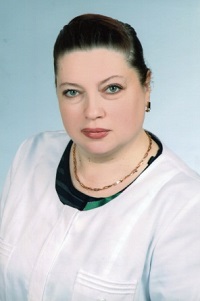
The Head
Iryna Romanova
Candidate of Medical Sciences, Head of the I Endocrinology Departments
E-mail: ms.romanova68@ gmail.com
Contact information: Address: 61070, Kharkiv, Kiev district, 16 Mikhail Gurevich St., Endocrinology Clinic
Romanova Iryna Petrivna – Candidate of Medical Sciences, Head of the I Endocrinology Department, +38 0505764350, +380573154456
The center of self-control, created on the basis of the clinic of the State Institution “V.Danilevsky Institute for Endocrine Pathology Problems of the NAMS of Ukraine”, provides an opportunity to teach patients with diabetes with methods of self-control, adaptation of treatment to specific living conditions, prevention of acute and chronic complications of the disease.
The training is conducted according to structured programs separately for each category of patients, as well as individually.
The center discusses the following issues:
• • Understanding the nature of the disease, its mechanisms of development, prognosis, and the principles of treatment.
• • How to control your condition by testing blood and urine (self-control) and how to respond to test results.
• • What are the signs of low (hypoglycemia) and high (hyperglycemia) of glucose in blood and ketosis, the frequency of measurement, prevention of these conditions.
• • Necessity of appointment of insulin, mechanism of action of insulin, types of insulin preparations and insulin delivery systems, insulin therapy regimens, injection technique training.
• • Training in the technique of calculating the required dose of insulin and manipulations performed during the injection, as well as providing information on indications for changing the dose of insulin injected, the care of the injection sites.
• • Information on diabetic complications and the causes of their occurrence.
• • Glycosylated hemoglobin, frequency of measurement.
• • Blood pressure levels, causes and mechanisms for increasing it. The importance of controlling blood pressure and lipid metabolism indices.
• • The state of mineral metabolism in diabetes, and in particular the risk of osteoporosis in violation of the carbohydrate metabolism.
• • Sexual abnormalities in diabetes.
• • The risks of the development of the diabetic foot, which can be directly affected by the person himself, the prevention of lower limb defeat (the rules “can be - can not be”), the training of footwear examination and behavior in the event of damage to the legs.
• • Basic rules for loading physical activity, behavior before and during physical activity.
• • Features of nutrition in diabetes 1 and 2 types, the main components of food and the concept of caloric content; ways to reduce the caloric content of the daily ration, which means the rule of food "traffic light".
• • The system of "bread units", the interchangeability of products containing carbohydrates. How to count the amount of bread units in foods that are taken at a specific time (breakfast, lunch or dinner) and, depending on this, adequately calculate the dose of insulin injected. Carbohydrates as the main source of energy, the classification of carbohydrates. What is a glycemic index? • Features of nutrition when treated with insulin therapy
• • Importance of water consumption, individual needs.
• • Features of nutrition in the presence of kidney pathology, non-alcoholic liver disease, as well as hypertension.
• • The use of sugar substitutes and sweeteners. • Patients learn to follow the diary of “a patient with diabetes”, where daily glycemic indexes, blood pressure values are listed, eaten foods, received therapy, changes in well-being are translated.
• • How does alcohol affect blood sugar indexes?
• • Diabetes and pregnancy: features of the current course of diabetes.